Websites
What to settle before investing in a new website
The quality of a website proposal depends on the decisions behind it. A clear business objective, realistic content responsibilities and an agreed life after launch make quotes easier to assess.
By Matteo Gelsomini ·
- Business objective
- Comparable scope
- Ongoing ownership
A website is a deliverable; the objective is the reason
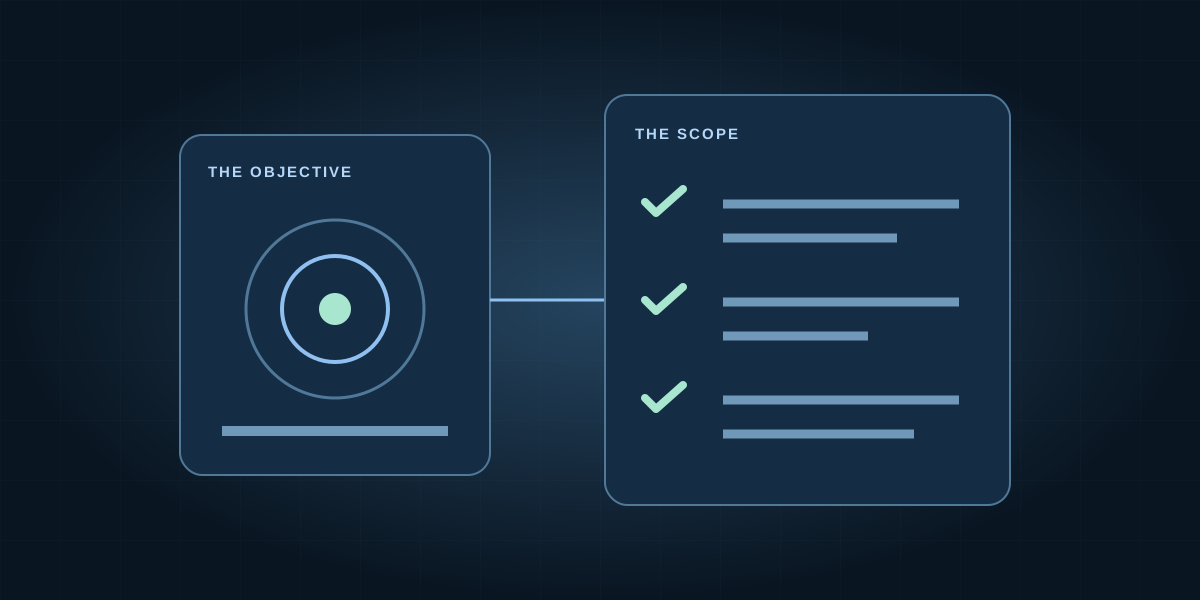
Two businesses can request a five-page website and need quite different work. One wants a credible presence for customers already arriving through referrals. Another needs to explain several services, qualify enquiries and support an active acquisition effort. Counting pages does not reveal the difference in content, decision paths or operational requirements.
A useful starting point is the change the owner wants to see. Better-fit enquiries, less repeated explanation or a clearer presentation of a specialist service can lead to different priorities. This does not require a technical specification. It requires enough business context for the proposal to explain why the recommended work is relevant.
Content is part of the work, not an afterthought
A site can be technically ready and still have little useful to say. Service information, project evidence, photography and approval of public claims all require somebody's attention. If their ownership is unclear, the project may stall or launch with generic material that fails to represent the business accurately.
The proposal should explain what content work is included and what the business needs to provide. Existing material may need editing or replacement, and a design direction may depend on usable brand assets. These dependencies affect the schedule and the quality of the result. An owner benefits from understanding them before comparing the price of development alone.
Integrations carry decisions beyond the interface
A booking button or enquiry form can look simple while connecting to a process with important rules. Someone must receive the information, decide what counts as a valid request and handle cases that do not fit the normal flow. If the business already uses other systems, the proposal needs to account for how those relationships affect the work.
For an illustrative appointment business, showing available times is only one part of the experience. Availability changes, cancellations and staff follow-up may also matter. The useful commercial question is which part of the workflow the project includes and where responsibility passes to an existing system or a member of staff.
Compare scope before comparing totals
A lower headline price may cover a different set of responsibilities. One quote may assume finished content, existing branding and a basic handover. Another may include content structure, integration work and a period of support. Neither is automatically the better choice. They need to be assessed against the same intended outcome.
Clear scope makes differences visible. It should identify the deliverables, the inputs required from the business, the acceptance approach and the treatment of changes. A responsible proposal also explains uncertainty. When requirements are still evolving, a smaller discovery engagement may be more useful than a fixed estimate based on assumptions nobody has checked.
Plan the business relationship after launch
Launch is the point at which customers start depending on the experience. Enquiries need an owner, content needs to remain accurate and the technical environment needs an agreed level of care. These responsibilities can be handled in different ways, but leaving them undefined creates avoidable uncertainty.
The owner should understand what they can access, how approved changes are requested and what happens if the working relationship changes. Support hours, renewals and incident handling should be described in the relevant agreement. A one-off build and an ongoing operating service are different commitments, even when they are provided by the same person.
Give the project a useful definition of success
Technical acceptance and commercial evaluation belong together, but they are not the same thing. A working form can be demonstrated at launch. Whether it brings better-fit enquiries needs time and a way to evaluate those enquiries. A project should explain which outcomes it can verify immediately and which need observation after release.
The most useful measures follow the objective. If the problem is repeated qualification work, the quality of information received may matter more than raw submission volume. If the business depends on referrals, customer understanding may matter more than a large traffic increase. Choosing that question early gives the website investment a clearer purpose.