Business systems
How much does custom software cost in Australia?
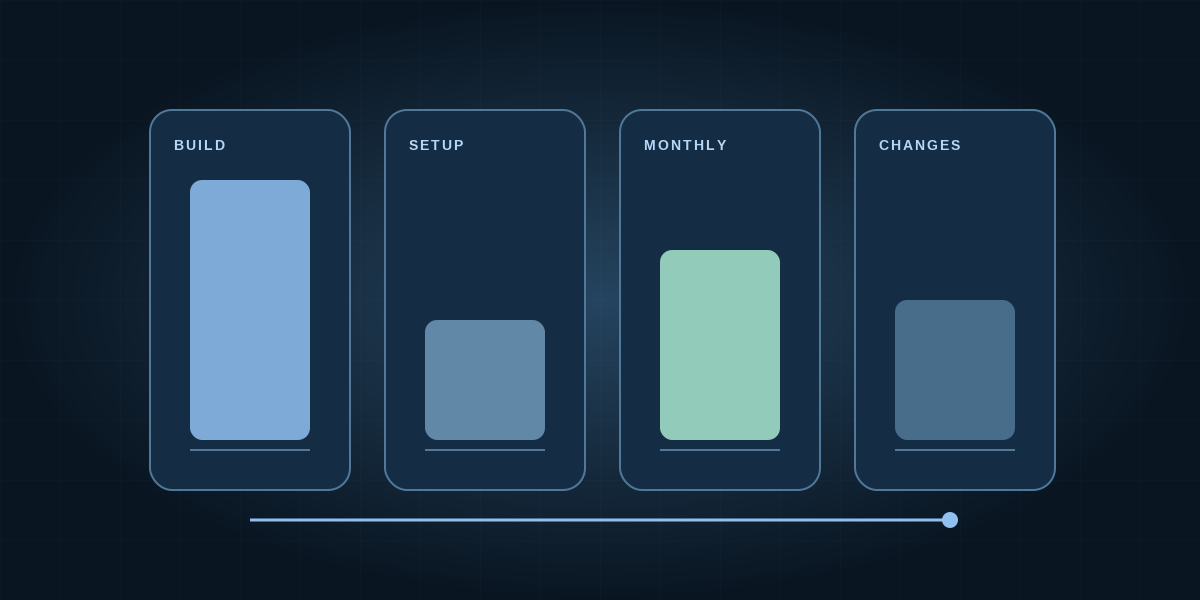
Price ranges for custom software are wide because the work behind them is. A useful estimate separates the first build, the setup, the monthly running cost and later changes, and explains what moves each one.
By Matteo Gelsomini ·
- Build and run
- Published prices
- Fixed quotes
Why the answers online are so vague
Search for the cost of custom software and the ranges run from a few thousand dollars to several hundred thousand. Both ends can be honest. A form that collects enquiries and reminds staff to follow up is custom software; so is a platform that takes payments, schedules deliveries and runs a warehouse. The label covers very different amounts of work.
A better question is what a specific piece of work costs, and what the business will keep paying once it relies on the system. That needs a short description of the process, the people who use it and the tools it must connect to. Without those, any number is a guess, however confidently it is stated.
The four parts of the price
Most quotes for business software combine four things. Separating them makes proposals comparable and shows where the money actually goes.
The first release
This is the build itself: the screens, rules, data and integrations that make one workflow work end to end. It is usually the largest single payment and the one most affected by scope. A first release that solves one problem completely is cheaper and more useful than one that solves five problems partly.
Setup and onboarding
The system needs a server, a database, a domain, secure certificates, deployment and backups before anyone can use it. Some providers include this in the build; others charge it separately. Ask which, because it is easy to miss when comparing two quotes.
Running costs
Hosting, monitoring, security updates, backups and a small amount of support time each month. This continues for as long as the business uses the system, so over a few years it can matter as much as the build. The hosting and care guide explains what that work involves.
Changes
Businesses change, and their software follows. Small adjustments may fit within a monthly allowance; larger ones are quoted as change requests before work starts. A clear rule for which is which avoids most disagreements later.
Published prices as a reference point
Few providers publish prices, which makes early budgeting difficult. The prices below are the current ones for custom software and hosting on this site, in Australian dollars. GST is not included and not applicable. The software prices are starting points: each project receives a fixed quote once its scope is agreed.
- Process review: AUD 300, fixed. One conversation, a one-page map of the process and a fixed quote. It is credited in full if the project goes ahead within 30 days.
- Operations portal, Essential: from AUD 3,000. Enquiry intake, follow-up with next actions and a staff board.
- Operations portal, Standard: from AUD 4,500. Adds a client area with secure accounts and document handling.
- Operations portal, Complete: from AUD 6,000. Adds agreements signed online, call sheets and reporting.
- Managed hosting: AUD 300, AUD 490 or AUD 890 a month, depending on capacity, backup history and support time.
- Extra operational work: AUD 120 an hour, agreed before it starts.
What moves the price up or down
The guide to custom business software lists the technical drivers: the number of user roles, integrations, rules with many exceptions, data migration and how critical the system is. In practice, a few scope decisions made early have the largest effect on the final number.
- Keeping the tools that already work. Accounting, payments and email are rarely worth rebuilding; connecting to them is cheaper.
- Starting with one workflow. The second and third workflows are cheaper once the first has established the data, accounts and hosting.
- Deciding the rules before the build. Open questions discovered halfway through are the most common cause of change requests.
- Being realistic about migration. Moving years of records, and checking them, can take as long as building a screen.
Budgeting the first year
A simple way to compare options is to add up the first twelve months: the first release, any setup that is charged separately, twelve months of hosting and care, and a modest allowance for changes once the team starts using the system. The total is usually more useful than the build price alone, because it is what the business actually commits to.
It also makes the alternatives comparable. A subscription product has no build cost but a monthly fee per user, and its own limits. A custom system has a build cost and a monthly fee that does not grow with the number of staff. Neither is cheaper in general; the first-year and third-year totals for your situation tell you which is cheaper for you.
Fixed price or hourly?
An hourly arrangement looks flexible, but it leaves the business carrying the risk of every estimate. A fixed price moves that risk to the provider, which is only fair when the scope is clear enough to price. That is why a fixed quote usually follows a short, paid piece of discovery rather than a first phone call.
With a fixed price, the proposal should state what is included and excluded, the milestones, how testing and acceptance work and what happens when something new is requested. If those are missing, the price is less fixed than it looks.
Comparing two quotes
Quotes for the same idea can differ by a factor of three or more. Before comparing the totals, put both on the same footing.
- Is setup included, and is the system hosted for you or handed over to run yourself?
- What does it cost per month after launch, and what does that monthly amount include?
- How many rounds of testing are included, and how are defects handled after go-live?
- Who owns the data, and what do you receive if you leave? The article on who owns the code covers the questions to ask.
- Is the price fixed for the agreed scope, or an estimate?
Frequently asked questions
Can we pay in stages?
Usually, yes. A proposal for a project normally sets payment milestones tied to delivery, such as approval of the design, the start of testing and go-live. The milestones should be in writing before work begins.
Does the build price include hosting?
Often not. Hosting and care are a monthly service that continues after launch, so they are quoted separately. Each operations portal package names the monthly plan it runs on, so the first-year cost is visible from the start.
Is there a way to start for less?
Sometimes the best answer is a standard product or an automation between tools you already have. A process review is a low-cost way to find out, and it may conclude that custom software is not needed yet. The plan finder gives indicative prices for each route in about a minute.
Why is the first step paid?
Because the estimate depends on understanding the process, and that takes real time. A paid review produces a fixed quote, and a written map of the process that stays useful whoever you choose to build it.